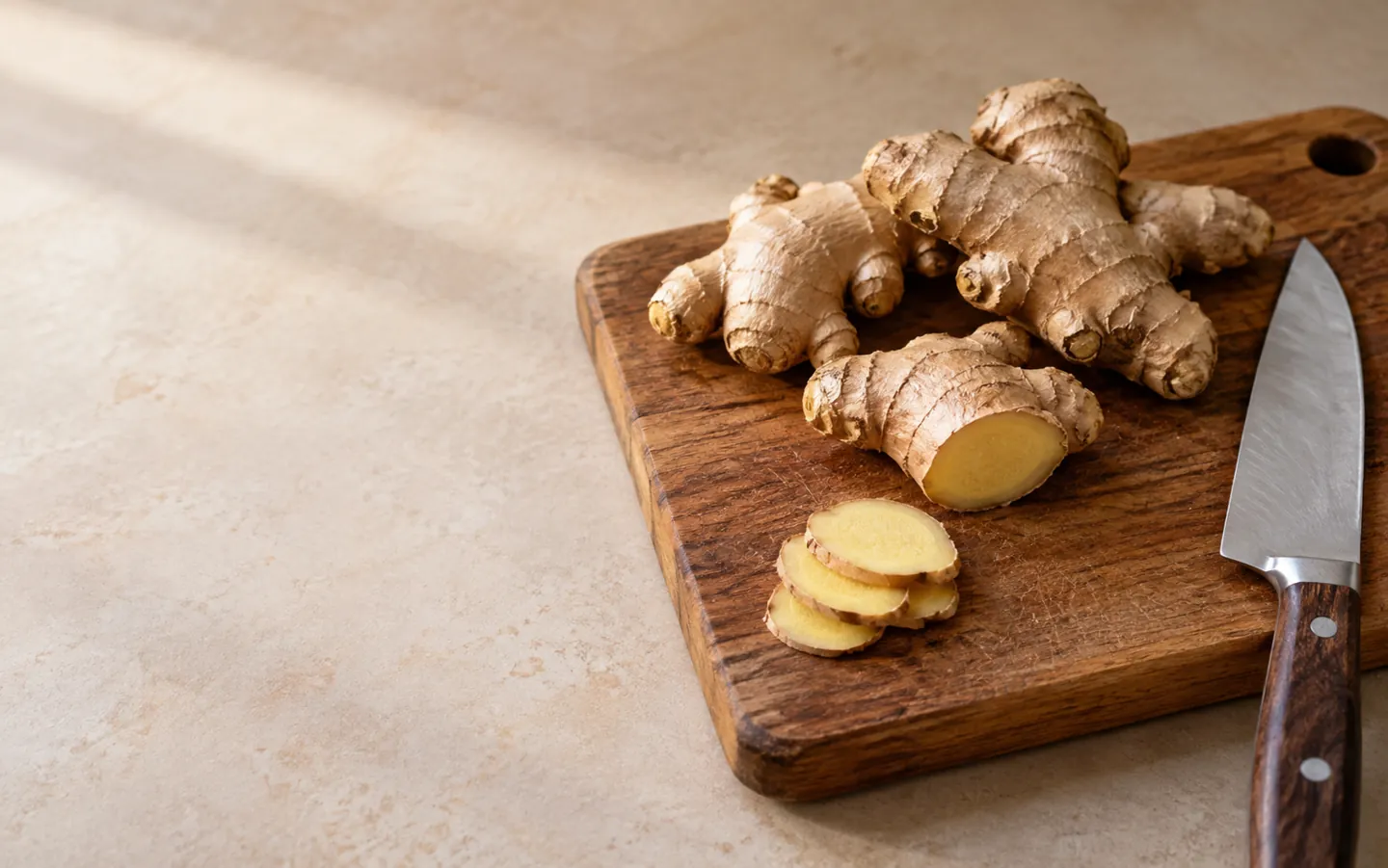
It is a rhizome, an underground stem, from a plant native to the eastern Himalaya and southern China. It has been used in folk medicine since ancient times, and today the best evidence for it is on nausea in pregnancy.
General information only, not medical advice. For advice about your own health, speak to a doctor, pharmacist or other qualified health professional.
A QUICK EVIDENCE CHECK
What kind of queasy?
Pick a situation to see what UK and US health sources say about ginger for it. The bar shows how strong the support is.
Based on NCCIH's ginger fact sheet and NHS pages on nausea, pregnancy sickness and motion sickness. General information, not personal medical advice.
TWO NUMBERS WORTH KNOWING
Most morning sickness passes. Some needs help.
Pregnancy is where ginger's evidence is strongest, so these two NHS figures are worth knowing.
16–20 weeks
When morning sickness usually clears
The NHS says nausea and vomiting is very common in early pregnancy and usually clears up by weeks 16 to 20.
PREGNANCY · NHS
24 hours
Unable to keep food or fluids down
The NHS says to contact a midwife, GP or 111 if you cannot keep food or fluids down for 24 hours, or have not passed urine in more than 8 hours.
WHEN TO GET HELP · NHS
A severe form, hyperemesis gravidarum, can be serious and may need specialist treatment, sometimes in hospital. Ginger is not a substitute for getting help.
FOUR SENSIBLE STEPS
Ginger, used with a little care.
These steps follow NHS and NCCIH guidance. Ginger in food is everyday cooking; supplements are worth a quick check first.
Start with food and drink
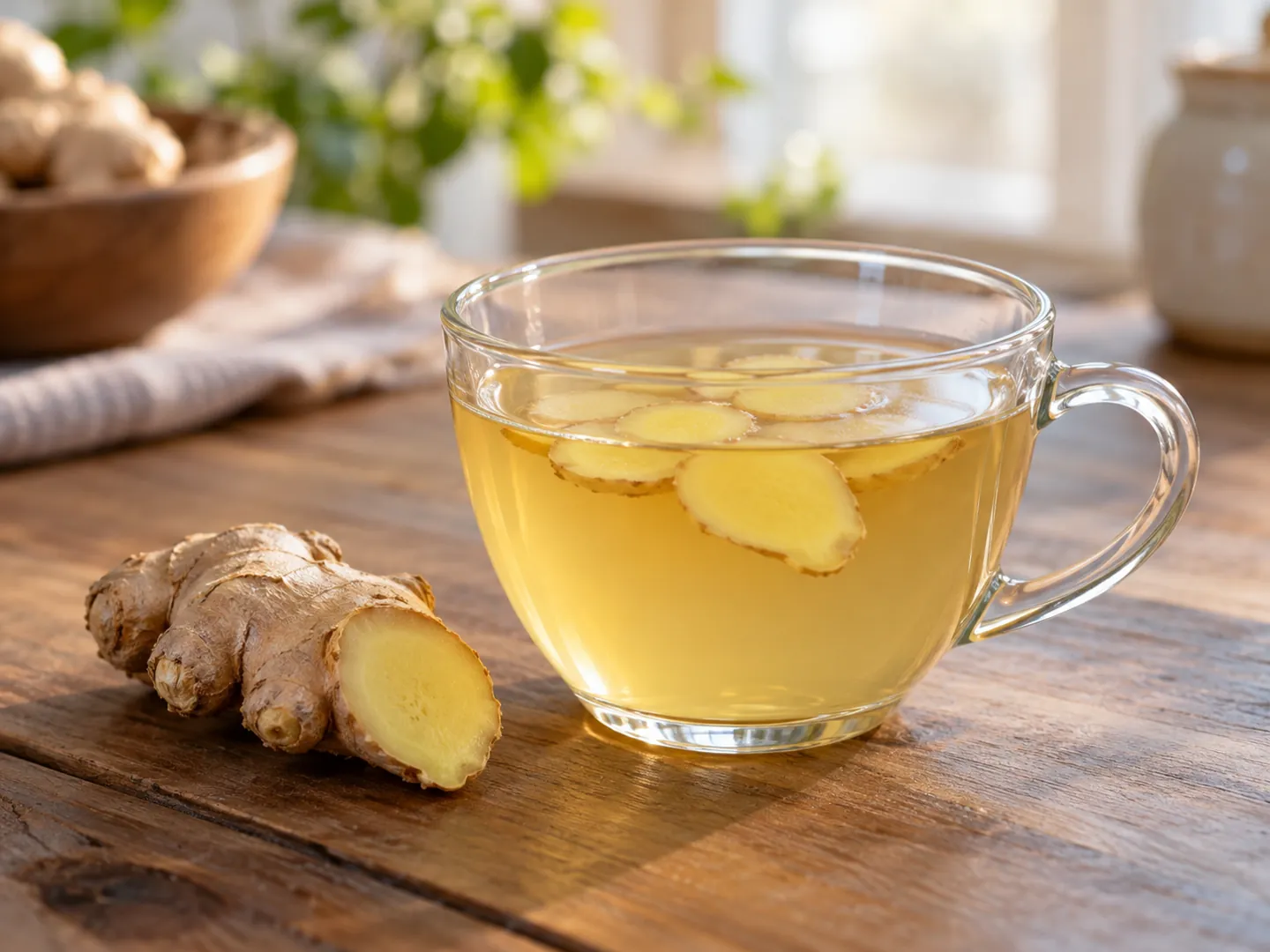
The NHS suggests ginger tea or foods containing ginger, such as ginger biscuits, when you feel sick.
Ask before supplements
Check with a pharmacist before taking ginger supplements in pregnancy, and with a health professional if you take any medicine.
Watch for side effects
NCCIH lists tummy discomfort, heartburn, diarrhoea and mouth and throat irritation.
Know when to stop and ask
If sickness does not ease in a few days, keeps coming back, or you cannot keep fluids down, contact a GP or 111.
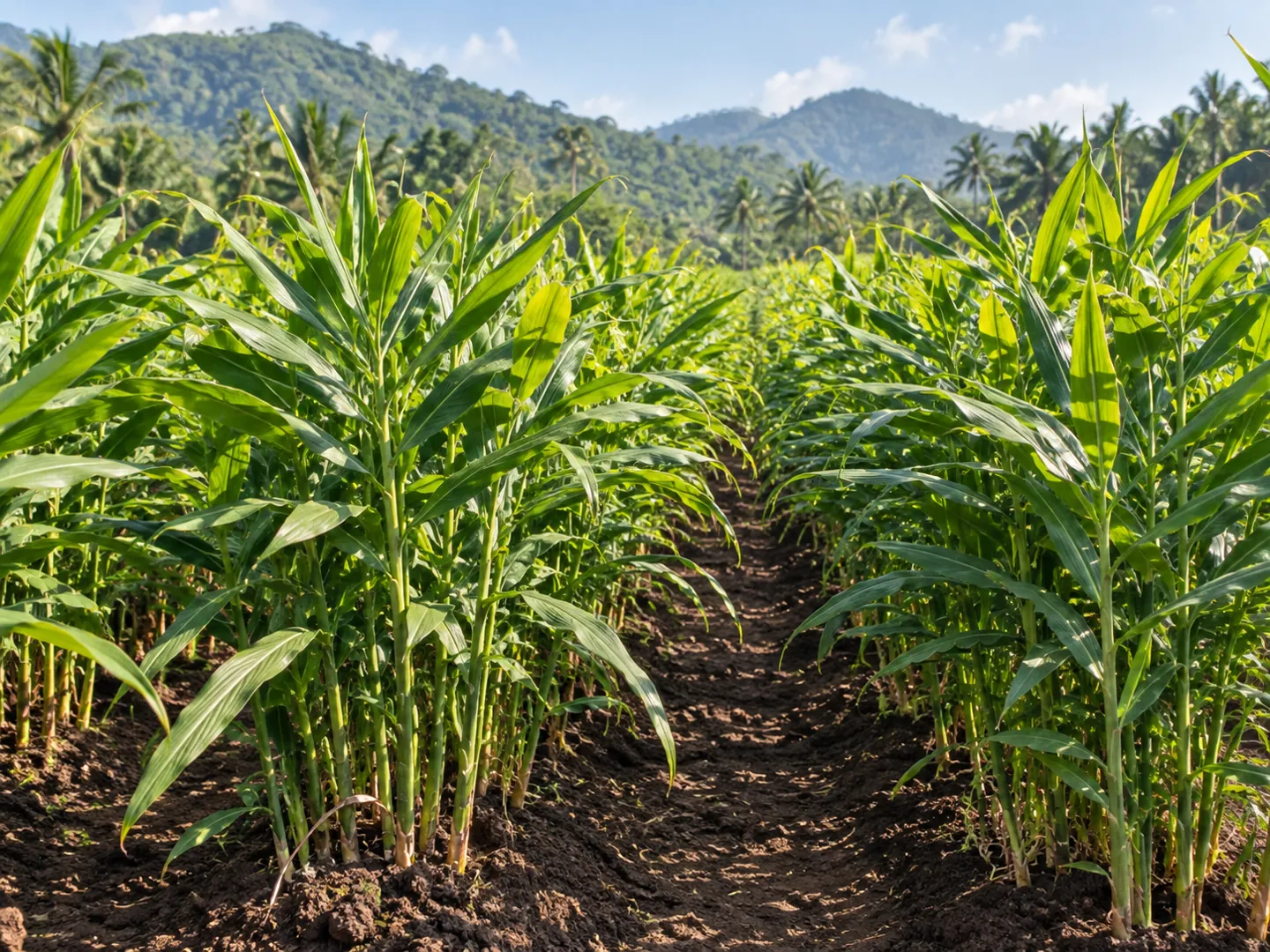
AI-generated image, not a photograph of a real person or place.AI-generated image, not a photograph of a real person or place.
WHERE GINGER GROWS
A tropical plant in every spice rack.
Ginger is Zingiber officinale, in the family Zingiberaceae. Kew's Plants of the World Online gives its native range as the eastern Himalaya to south-central China, including Assam, and lists it as introduced across many tropical regions.
NCCIH describes it as native to warm parts of Asia and now also grown in parts of South America, Africa and the Middle East. Kew describes it as a perennial, rhizomatous plant, and the rhizome is the part we buy and cook.
Questions
Questions people ask
Is ginger a root?
Not quite. The part we eat is a rhizome, an underground stem. NCCIH describes it this way, and Kew lists ginger as a rhizomatous perennial.
Where does ginger come from?
Kew gives its native range as the eastern Himalaya to south-central China. NCCIH says it is now also grown in parts of South America, Africa and the Middle East.
Does ginger help with morning sickness?
NCCIH says research shows it may help, and the NHS says there is some evidence. The NHS advises checking with a pharmacist before taking ginger supplements in pregnancy.
Does ginger work for travel sickness?
The NHS suggests trying it as a tablet, biscuit or tea, but NCCIH says most studies have not shown ginger to help with motion sickness.
Does ginger have side effects?
NCCIH says oral ginger can cause abdominal discomfort, heartburn, diarrhoea and mouth and throat irritation, and advises people taking medicines to talk to a health professional first.